

Cupids Hypnosis 2.0 Pheromone Cologne Product Information Updated as Consumer Interest in Pheromone-Infused Fragrance Products Grows in 2026
Cupids Hypnosis 2.0 Pheromone Cologne Product Information Updated as Consumer Interest in Pheromone-Infused Fragrance Products Grows in 2026
New York, NY, Feb. 06, 2026 (GLOBE NEWSWIRE) -- Disclaimer: This article is for informational purposes only. It is not medical advice. Individuals with known skin sensitivities or fragrance allergies may wish to review ingredient disclosures carefully or consult a qualified professional before use. This content does not diagnose, treat, cure, or prevent any disease. If you purchase through links in this article, a commission may be earned at no additional cost to you.
About This Release
This release summarizes publicly available company disclosures and general category context. It does not evaluate effectiveness, outcomes, or individual suitability, and nothing in this content should be interpreted as medical advice or a product endorsement.
As consumer interest in pheromone-infused fragrance products continues to grow heading into 2026, updated product disclosures for Cupids Hypnosis 2.0 have recently become publicly available. With more people researching what's out there, detailed product information is now accessible for anyone trying to better understand their options within this category.
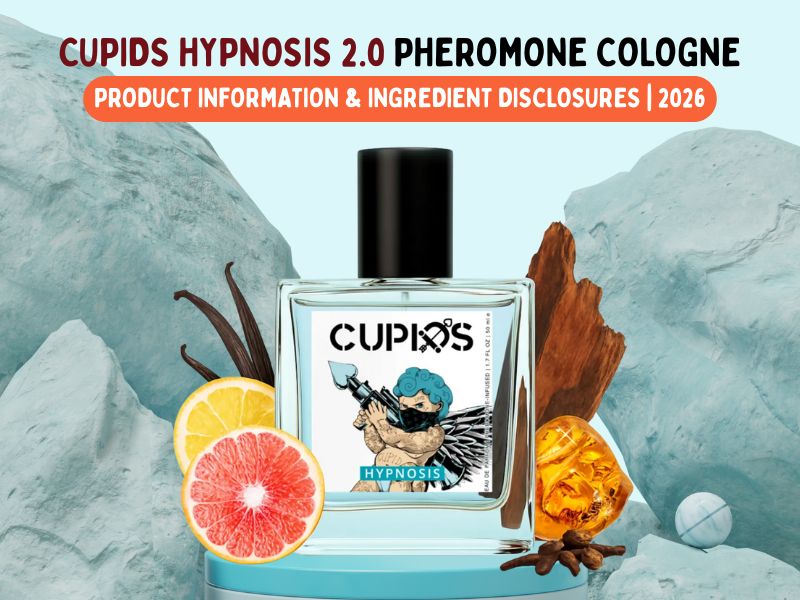
This article provides informational context about the pheromone fragrance category and summarizes what Cupids has disclosed about its product. Readers seeking primary-source detail can view the current Cupids Hypnosis 2.0 offer (official Cupids page) to review the company's complete product disclosures directly. This article does not assess product effectiveness or outcomes and focuses solely on publicly available disclosures.
Why Consumers Are Researching Pheromone Fragrance Products
Publicly observable online search behavior suggests that more consumers are researching pheromone-infused fragrance products as a category. Interest in how scent-based products are formulated and marketed has grown in recent years, and consumers often search for product disclosures, ingredient transparency, and company background information before making purchasing decisions.
Common questions consumers research in this category include what products are available, what ingredients are disclosed on product labeling, what factors might be worth considering when comparing options, and how companies substantiate the claims presented in their marketing materials. This type of research behavior is consistent with broader consumer trends toward increased product transparency across personal care and wellness categories.
Worth noting: the pheromone fragrance category includes a wide variety of product formats, scent profiles, and formulation approaches. This overview does not assess or compare product performance across formats.
What "Pheromone Cologne" Means in Marketing vs. Science
If you've spent any time searching for pheromone colognes online, you've probably noticed that the marketing language and the scientific language don't always line up. That's worth understanding before evaluating any product in this space — including Cupids Hypnosis 2.0.
In consumer fragrance marketing, the term "pheromone cologne" typically refers to fragrances that include synthetic pheromone compounds, although evidence for real-world effects in consumer use remains limited and debated. Pheromones are chemical compounds that occur naturally across many species, and their role in animal behavior has been studied extensively. The question of whether synthetic versions of these compounds produce measurable effects when applied in a consumer fragrance setting is where the conversation gets more nuanced.
Researchers have studied compounds such as androstenone, androstadienone, and androstenol in controlled settings, and some published studies have reported observations related to perception and social interaction. However, these findings come with significant caveats — including small sample sizes, confounding variables, and the difficulty of isolating the effect of a single compound in complex real-world environments. Scientific findings related to synthetic pheromones in consumer fragrance products remain limited and subject to ongoing debate, and no consensus exists regarding predictable effects in real-world consumer use.
What this means for consumers is straightforward: the word "pheromone" on a product label is a formulation descriptor, not a guaranteed outcome. Products in this category should be evaluated based on what the company discloses — ingredients, manufacturing, policies, and transparency — rather than on implied results.
What Pheromone-Infused Fragrances Typically Refer To
The term "pheromone fragrance" generally refers to scent-based products that incorporate synthetic pheromone compounds into their formulations alongside traditional fragrance ingredients. These products are typically marketed as colognes, perfumes, or body sprays and are applied topically.
When looking into products in this category, shoppers often encounter a range of formulation approaches. Some companies disclose individual pheromone compound names and concentrations, while others use proprietary blend names that group multiple compounds together. The level of transparency varies significantly from brand to brand, which is one reason many people look for third-party informational content before making a purchase.
As with any topical personal care product, consumers may want to consider factors such as ingredient disclosure, manufacturing standards, company transparency, and return policies when evaluating options in this space. Research in this area is ongoing, and no consensus exists that synthetic pheromone fragrances produce predictable behavioral outcomes in consumer settings.
Fragrance Disclosure Basics: EDP, EDT, and Scent Families
A common question that comes up when researching fragrance products is the difference between concentration levels. If you've seen the terms EDP and EDT and weren't sure what they mean, here's a quick breakdown.
Eau de Parfum (EDP) generally refers to a fragrance concentration level typically ranging from 15% to 20% aromatic compounds. Compared with EDT, this higher concentration can influence how a fragrance is formulated and categorized. Eau de Toilette (EDT) generally refers to a lighter concentration, typically ranging from 5% to 15%. Neither designation says anything about a product's quality or value — it is simply a description of how concentrated the fragrance oil is within the overall formula.
Cupids Hypnosis 2.0 is described by the company as an Eau de Parfum (EDP) in the Aromatic Fougère fragrance family. "Fougère" is a well-established fragrance classification that typically features a combination of fresh, herbaceous, and warm notes. It is one of the classic scent families used across the fragrance industry and is not specific to any single brand or product type. The company describes the scent profile as including notes commonly associated with spice, vanilla, amber, and musk.
Understanding these terms can help consumers compare fragrance products more effectively based on factual product characteristics rather than subjective marketing descriptions.
Ingredient Transparency in the Pheromone Fragrance Category
Ingredient transparency is a factor many consumers consider when researching personal care and fragrance products. Companies vary in how much detail they provide about formulation, sourcing, and manufacturing processes. Some brands publish complete ingredient panels with individual compound details, while others use proprietary blend names that group ingredients together.
According to publicly available company disclosures, Cupids Hypnosis 2.0 references Androstenone, Androstadienone, and Androstenol within a proprietary blend the company brands as PheroPureVXN™. This overview is informational only and does not assess effects, outcomes, or individual suitability.
The company's published materials reference a blend of compounds commonly discussed within this category.
Common Consumer Questions When Evaluating Pheromone Fragrance Products
People researching products in this space tend to have similar questions. Below are some of the most common topics that come up, along with what is generally known about each.
What is a proprietary pheromone blend? A proprietary blend is a formulation where the company groups multiple ingredients under a single branded name — in this case, PheroPureVXN™. This means the individual compound quantities within the blend are not disclosed on the label. Some consumers prefer brands that list individual amounts, while others are comfortable with proprietary blends. Neither approach is inherently better; it comes down to personal preference for disclosure detail.
Are pheromone fragrances regulated as drugs? In the United States, fragrances and cosmetic products are generally regulated by the FDA under the Federal Food, Drug, and Cosmetic Act. Products marketed as cosmetics or fragrances do not require FDA pre-market approval, but companies are responsible for ensuring their products are safe and properly labeled. Pheromone colognes are commonly marketed as fragrance and cosmetic products rather than drugs or medical devices, and consumers can review the company's labeling and disclosures for how the product is positioned.
What should people with fragrance sensitivities consider? Anyone with known sensitivities to fragrance compounds, essential oils, or specific allergens should review the full ingredient list on the product's official page before purchasing. Individuals with sensitivities may prefer to review full ingredient disclosures and consider seeking guidance from a qualified professional. Individuals with respiratory conditions or chemical sensitivities may also want to consult a qualified professional.
What does EDP mean compared with EDT? EDP (Eau de Parfum) and EDT (Eau de Toilette) refer to the concentration of fragrance oils in the formula. EDP generally has a higher concentration (15–20%) and EDT a lower concentration (5–15%). The distinction is about concentration, not quality.
How do refunds and returns typically work in this category? Refund and return policies vary significantly across fragrance brands. Some offer full refunds within a specified window, while others limit returns to unopened products only. Consumers should always review the specific brand's published return policy before purchasing. The terms disclosed by Cupids are summarized later in this article.
What does "made in the USA" mean for fragrance products? The phrase "made in the USA" generally indicates that the product was manufactured or assembled domestically, though specific FTC guidelines govern when this claim can be made. Anyone interested in manufacturing origin should review what the company discloses about its production facilities and processes.
Can pheromone colognes be worn daily? From a product-use standpoint, this depends on the specific product's formulation and the individual's skin sensitivity. The Cupids published FAQ addresses questions related to frequency of use, while also noting that individuals experiencing irritation should discontinue use and consult a qualified professional. This article does not evaluate the accuracy of any company claims regarding frequency of use.
What should consumers know about online fragrance reviews? Online reviews for fragrance and personal care products can vary widely in quality and reliability. Some reviews may be incentivized or compensated, while others reflect genuine consumer experiences. The Cupids website includes a disclosure noting that some testimonials may include individuals who received compensation or free product. Anyone researching products in this category should consider multiple information sources and prioritize verified disclosures over anecdotal claims.
A Consumer Checklist for Comparing Pheromone Fragrance Products
For consumers comparing products in this category, certain non-performance factors can help clarify what's actually disclosed and what remains unclear. The following checklist focuses on transparency and labeling completeness, not on product outcomes:
Ingredient disclosure — Are all pheromone compounds and fragrance ingredients listed individually, or does the label use a proprietary blend name that obscures specific quantities?
Allergen disclosures — Does the company clearly state whether the product contains common allergens or potential skin irritants?
Concentration and format clarity — Are product concentration (e.g., Eau de Parfum vs. Eau de Toilette) and volume clearly stated?
Customer service accessibility — Is contact information (email, phone, address) clearly provided?
Policy clarity — Does the company publish refund and return policy terms in accessible language?
Manufacturing disclosure — Does the company identify where the product is made and provide information about its formulation team or process?
Review transparency — Does the company disclose whether any testimonials or reviews involved compensation or free product?
This checklist does not evaluate whether a product "works" but helps consumers compare disclosure quality across brands.
What Cupids Discloses About Its Product
According to Cupids LLC, the business is based in Tucson, Arizona, and its pheromone formulations are described as being developed in the United States. Cupids states that its formulation team has over 20 years of pheromone research experience. Its published materials reference a blend of compounds commonly discussed within this category.
The product is described as a 50ml Eau de Parfum in the Aromatic Fougère fragrance family. Cupids describes the scent profile as including notes commonly associated with spice, vanilla, amber, and musk. The brand publishes its Terms of Service, Privacy Policy, and Refund Policy on its website, and provides customer support via email at support@cupids.com and by phone at (513) 540-0761.
The Cupids website also includes a FAQ section addressing common consumer questions about the product, its formulation process, and general usage information. Readers are encouraged to review the company's full disclosures directly by visiting the current Cupids Hypnosis 2.0 offer (official Cupids page) before making any purchasing decisions.
Refund Policies and Customer Support Disclosures
According to its published policies, Cupids describes a 30-day refund policy and provides customer service contact methods on its website. Products must be returned in original packaging via trackable mail, and a Reference ID must be obtained from customer support prior to submitting a return. Cupids also notes that original shipping fees and return shipping fees are non-refundable, and that all international sales are final and not eligible for refunds. Readers should review the full terms directly on the official page.
When to Consult a Healthcare Professional
While topical fragrance products are widely available, certain individuals may want to discuss new personal care products with a qualified healthcare professional before use. This commonly includes people with known skin sensitivities or dermatological conditions, individuals with fragrance allergies or chemical sensitivities, those who are pregnant or nursing, and anyone with respiratory conditions that may be aggravated by scented products.
Many people choose to consult qualified healthcare professionals for personalized guidance on whether any topical product fits their individual health circumstances. This is particularly relevant for anyone with existing skin conditions or known sensitivities to fragrance compounds.
Conclusion
This article has provided an informational overview of publicly available disclosures for Cupids Hypnosis 2.0 within the broader context of the pheromone-infused fragrance category. The goal throughout has been to give readers the factual context, category background, and disclosure details needed to make an informed decision about whether this product fits what they are looking for.
Nothing in this content should be interpreted as medical advice, a product endorsement, or a performance claim. Consumers are encouraged to review primary-source product information, consult healthcare professionals where appropriate, and make informed decisions based on verified disclosures rather than marketing claims.
Email: support@cupids.com
Phone: (513) 540-0761
Disclaimer: This article is for informational purposes only. It does not constitute medical advice and should not be used as a substitute for consultation with a qualified healthcare professional. Individual results and experiences may vary. If you purchase through links in this article, a commission may be earned at no additional cost to you.

Email: support@cupids.com Phone: (513) 540-0761

Legal Disclaimer:
EIN Presswire provides this news content "as is" without warranty of any kind. We do not accept any responsibility or liability for the accuracy, content, images, videos, licenses, completeness, legality, or reliability of the information contained in this article. If you have any complaints or copyright issues related to this article, kindly contact the author above.
